
Submitted by Emma Sullivan
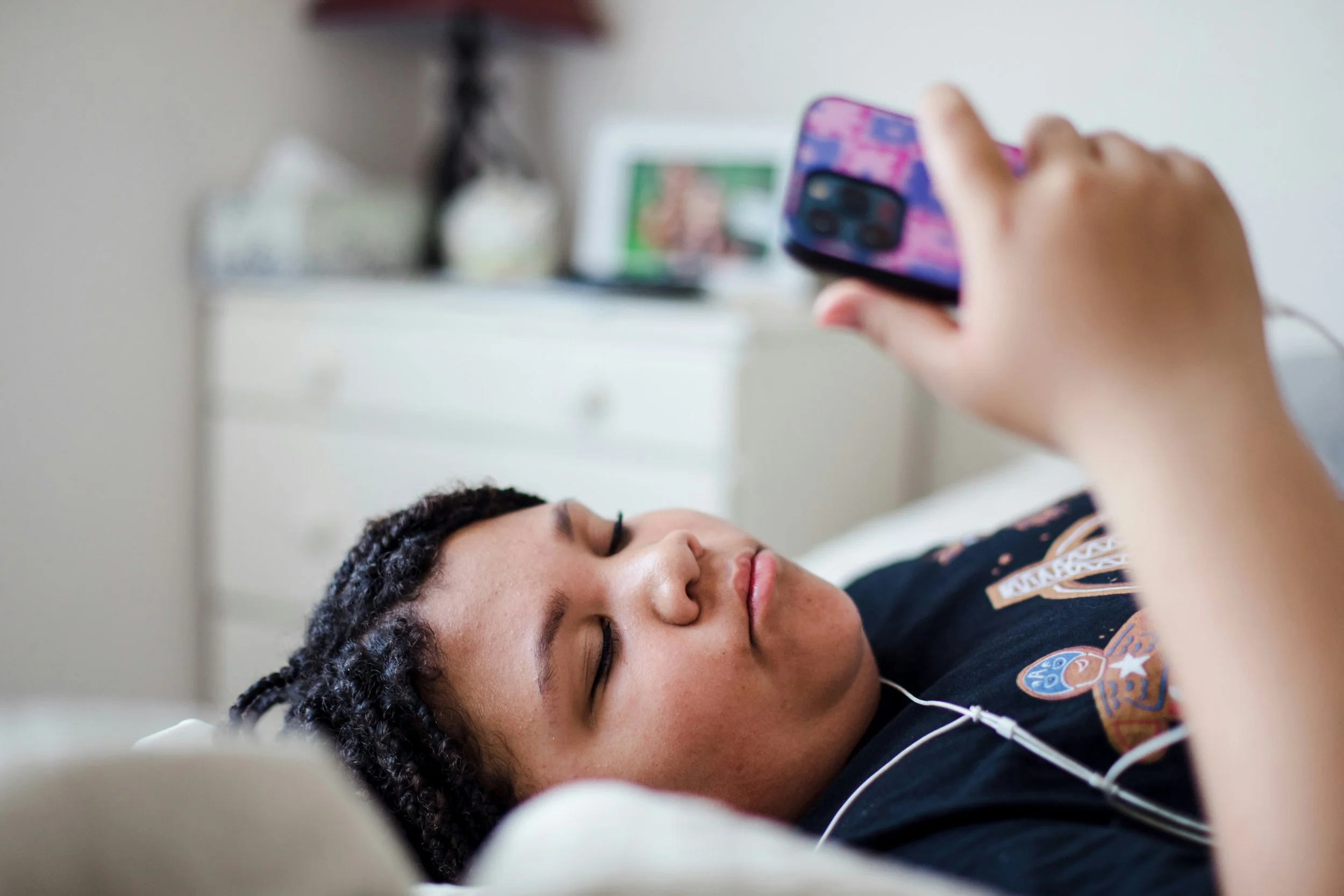


Social media is now woven into our everyday lives, with nearly 5 billion active users worldwide (that’s almost 70% of the total population!). However, its widespread use has led to worries about whether it might be harming young people’s sleep.
Previous research shows that heavier social media use tends to go hand in hand with poorer sleep. However, most of these studies look at social media use and sleep at a single point in time, so they cannot show whether one leads to the other.
In our recent review, we focused on longitudinal studies (research that measures social media use first and sleep later) published in the last five years. We included 12 studies of young people aged 8-25 years.
Around 70% of our included studies suggested that greater or more “problematic” patterns of social media use was followed by poorer sleep outcomes, such as going to bed later and taking longer to fall asleep. These negative effects were especially evident when young people engaged with social media close to bedtime.
The studies included in this review had important limitations. Most relied on young people’s own reports of how often they used social media and how well they slept, and several studies used questions or scales to assess social media use that have not yet been thoroughly tested. This means we cannot be sure exactly how reliable these effects are.
In light of this, we propose that future research should use well-tested measures that also look beyond just time spent on social media to understand how different ways of using social media may affect young people’s sleep over time.
I’m a parent – what does this mean for me?
Families might consider setting shared rules, such as device-free times in the evening or keeping bedtimes as screen-free spaces, to support better sleep. However, it is important that young people are involved in deciding which strategies to try. Giving them a voice and choice in this process may make these approaches more acceptable and effective in the long term.
I’m a clinician – what does this mean for me?
When sleep problems are raised, it may be helpful to ask about social media habits (for example, does the young person use social media close to bedtime?). Clinicians can also suggest practical steps for reducing night-time social media use, including placing devices outside the bedroom at night and enabling “Do not disturb” mode.